HTML, CSS, and JavaScript Roadmap for Web Developers in 2026
If you’re starting your web development journey in 2026, the first question you’ll face is simple—but confusing: What should I learn first: HTML, CSS, or JavaScript?
After covering the broader career path in my previous guide on starting a web development career in 2026, this article focuses on the core foundation every web developer must master.
Before frameworks, libraries, or cloud tools, your success depends on how well you understand HTML, CSS, and JavaScript. I am telling you this is the fundamental part of being a web developer especially learning JavaScript.
Why HTML, CSS, and JavaScript Still Matter in 2026
Despite the rise of modern frameworks and AI-assisted development, these three technologies remain the backbone of the web:
- Every framework compiles down to HTML, CSS, and JavaScript
- Debugging is impossible without understanding the basics
- Employers still assess core fundamentals in interviews
- AI tools work best when you understand what they generate
If you skip these fundamentals, everything later feels fragile.
The Correct Learning Order (Very Important)
1. HTML — Structure Comes First
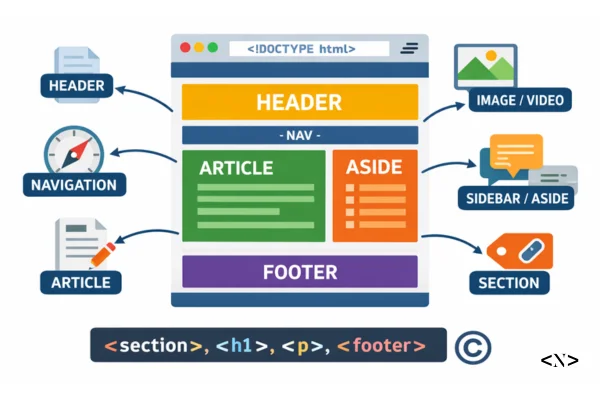
HTML defines what exists on a page. Think of it as a skeleton (body) of a car.
Focus on learning:
- Semantic HTML (
header,nav,main,section,article) - Forms and inputs
- Accessibility basics (ARIA, labels, alt text)
- SEO-friendly markup
HTML teaches you to think in structure, not design.
2. CSS — Layout, Responsiveness, and Design
CSS is where most beginners struggle—not because it’s hard, but because it’s underestimated. Think of it as a design, color and aesthetic of a car.
Core CSS topics for 2026:
- Box model and positioning
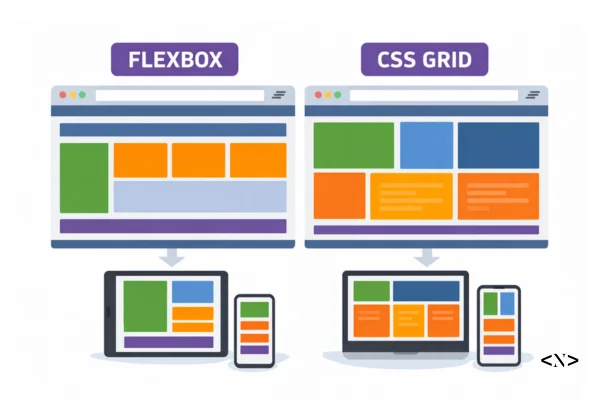
- Flexbox and Grid (mandatory)
- Responsive design (mobile-first)
- Modern CSS features (variables, clamp, media queries)
- Utility-first approaches (Tailwind fundamentals)
Good CSS separates average developers from strong ones.
3. JavaScript — Making the Web Interactive
JavaScript adds logic and behavior to your websites. Imagine it like adding features to a car.
You should focus on:
- Variables, functions, and control flow
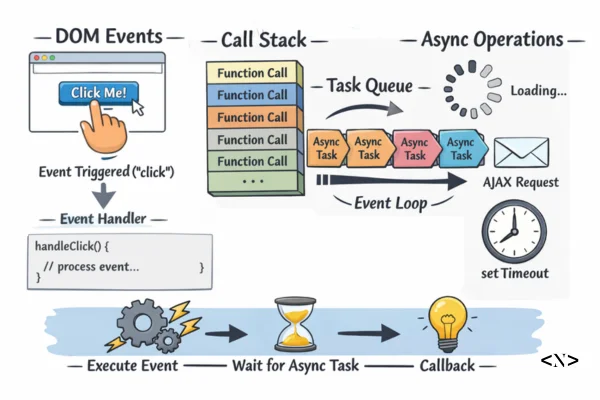
- DOM manipulation
- Events and browser APIs
- Async JavaScript (Promises, async/await)
- Fetching APIs and handling data
In 2026, understanding how JavaScript works internally matters more than memorizing syntax. When you begin to use the syntax in your daily life, you will gradually learn it.
Should You Learn TypeScript Early?
Yes—but after JavaScript basics.
TypeScript helps you:
- Write safer code
- Catch bugs early
- Scale applications confidently
Once you’re comfortable with JavaScript fundamentals, TypeScript becomes a natural upgrade.
Common Mistakes Beginners Make
Avoid these early traps:
- Jumping directly into React or Next.js
- Copy-pasting code without understanding
- Ignoring accessibility and semantics
- Overusing libraries before learning vanilla JavaScript
- Relying completely on AI without reviewing output
Strong fundamentals save you months of confusion later.
How Long Should You Spend on These Fundamentals?
A realistic timeline in 2026:
- HTML & CSS: 3–4 weeks
- JavaScript: 4–6 weeks
- Practice projects: Ongoing
Small projects matter more than tutorials.
Examples:
- Personal landing page
- Responsive blog layout
- Interactive to-do app (vanilla JS)
What to Learn Next After This Roadmap
Once you’re comfortable:
- Move to Frontend vs Backend development
- Learn Git and GitHub
- Pick a framework like React or Next.js
- Explore backend basics and databases
This roadmap prepares you for everything that comes next.
FAQs
Can I skip HTML and CSS and start with JavaScript?
No. JavaScript relies on HTML and CSS to manipulate real interfaces. Skipping them causes confusion later.
Is CSS still relevant with Tailwind and UI libraries?
Yes. Tailwind is built on CSS concepts. Without CSS knowledge, debugging becomes difficult.
How good should my JavaScript be before learning React?
You should understand functions, arrays, objects, events, async/await, and basic DOM manipulation.
Are these skills enough to get a job?
They form the foundation. Combined with projects and frameworks, they lead to entry-level roles.
Final Thoughts
HTML, CSS, and JavaScript are not optional skills—they are career insurance for web developers. In 2026, tools will change, frameworks will evolve, and AI will assist more—but strong fundamentals will always keep you relevant.
Master these first, and everything else becomes easier.
If you’re just beginning, start here—and build forward with confidence.
To understand my personal experience and transition into web development, refer to my earlier article: From PC Gamer to Web Developer.